From Bus Topology to Hubs and the Beginning of Star Networks

As Ethernet networks grew, the limitations of the coaxial bus topology became impossible to ignore.
The need for easier cabling, more devices, and simpler installation led to the next evolutionary step:
The Ethernet Hub
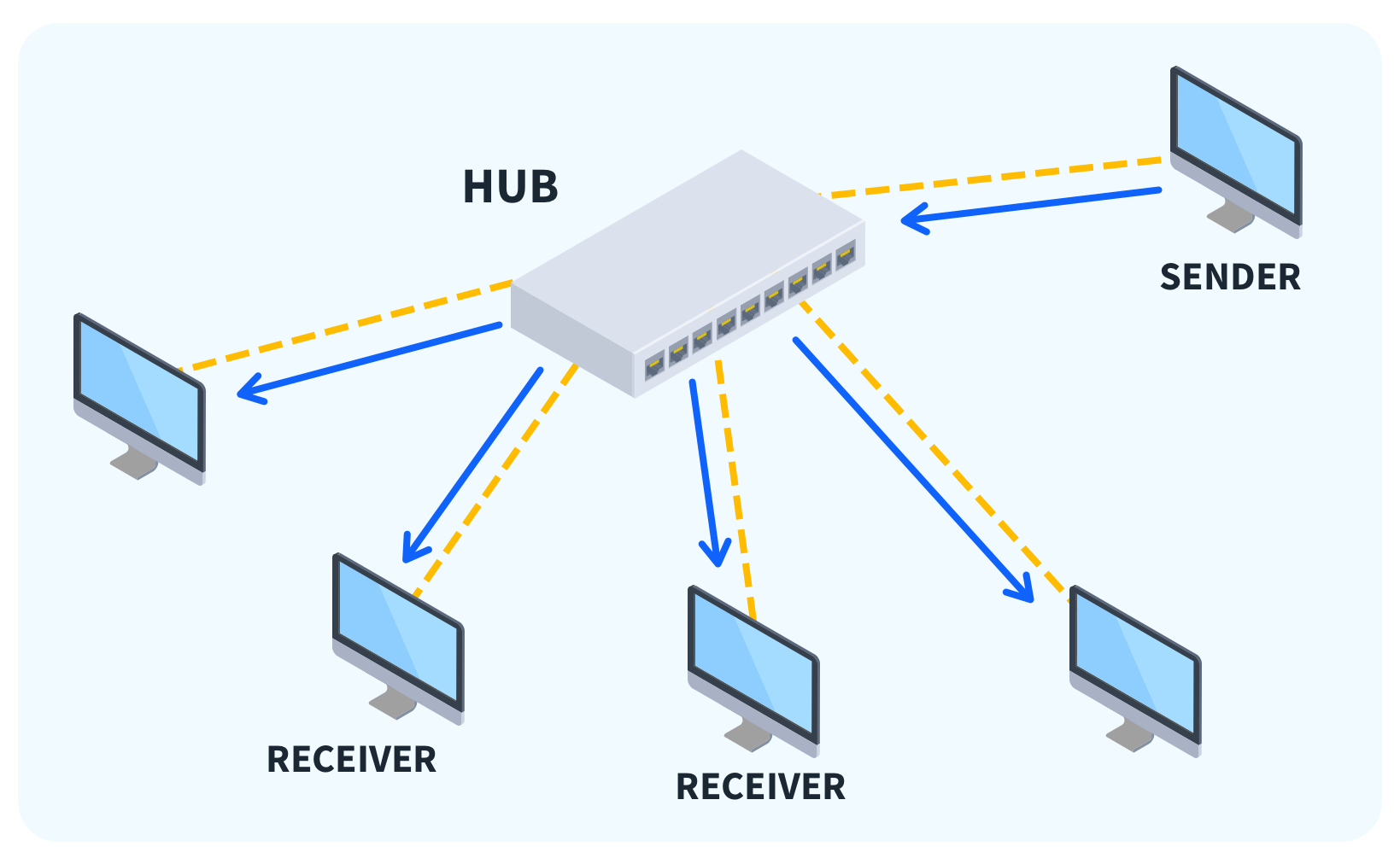
Even though hubs looked like a major upgrade, internally they still functioned as an electrical bus — exactly like plugging several devices into the same extension cord.
Hubs: A Shared Electrical Signal with Individual Cables
6
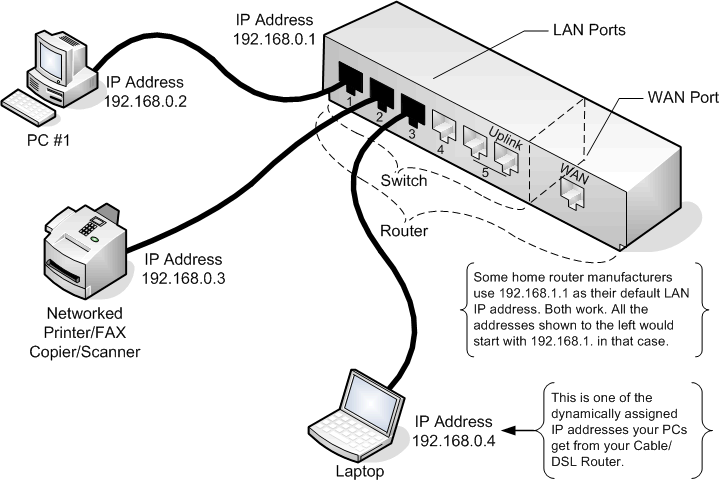
Hubs introduced a major convenience:
- Each computer now had its own cable,
- These cables were UTP Ethernet cables (the blue cables we still use at home),
- The messy coaxial bus was replaced by a central device.
This brought immediate benefits:
- easier installation,
- easier maintenance,
- no more “entire network goes down if the coax breaks,”
- the physical layout became a star topology.
However…
Electrically, the hub still behaved like the old bus topology.
It repeated the incoming electrical signal to all other ports:
- one device transmits → every port receives,
- collisions still happen exactly the same way,
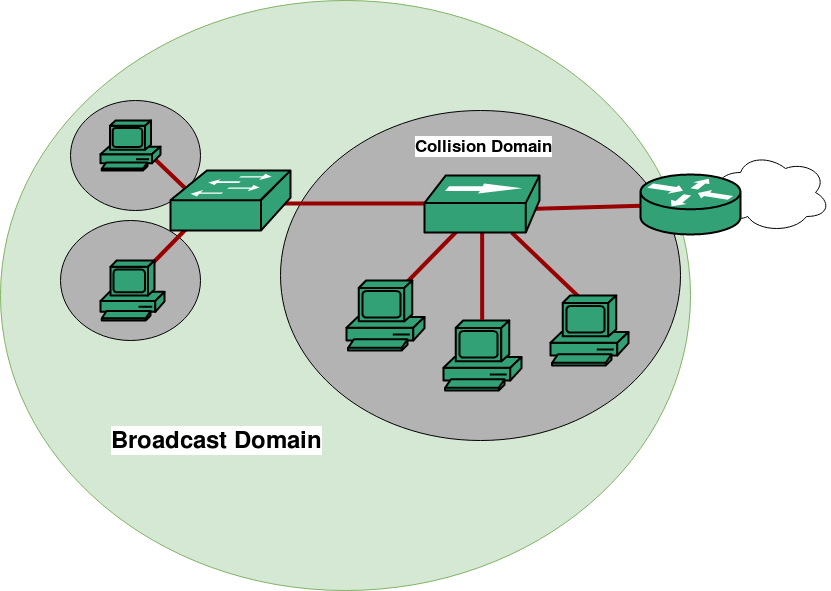
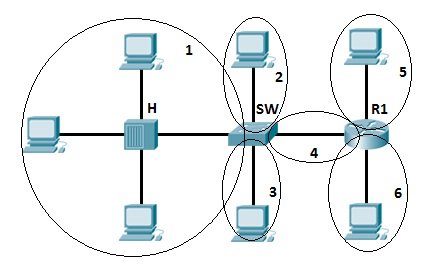
- the entire network remains a single collision domain.
Collision Problems Persisted, Now Even Worse
Hubs allowed networks to grow by simply adding more ports.
But this created a new problem:
➤ More ports = more hosts = more collisions.
To expand the number of ports, admins chained hubs together:
Hub → Hub → Hub → HubEach additional hub:
- amplified congestion,
- increased collisions,
- made the network slower,
- extended the collision domain across the entire environment.
A single broadcast or collision could impact dozens of computers.
It became clear that Ethernet needed segmentation, not just expansion.
The Need for Segmentation, Enter the Bridge
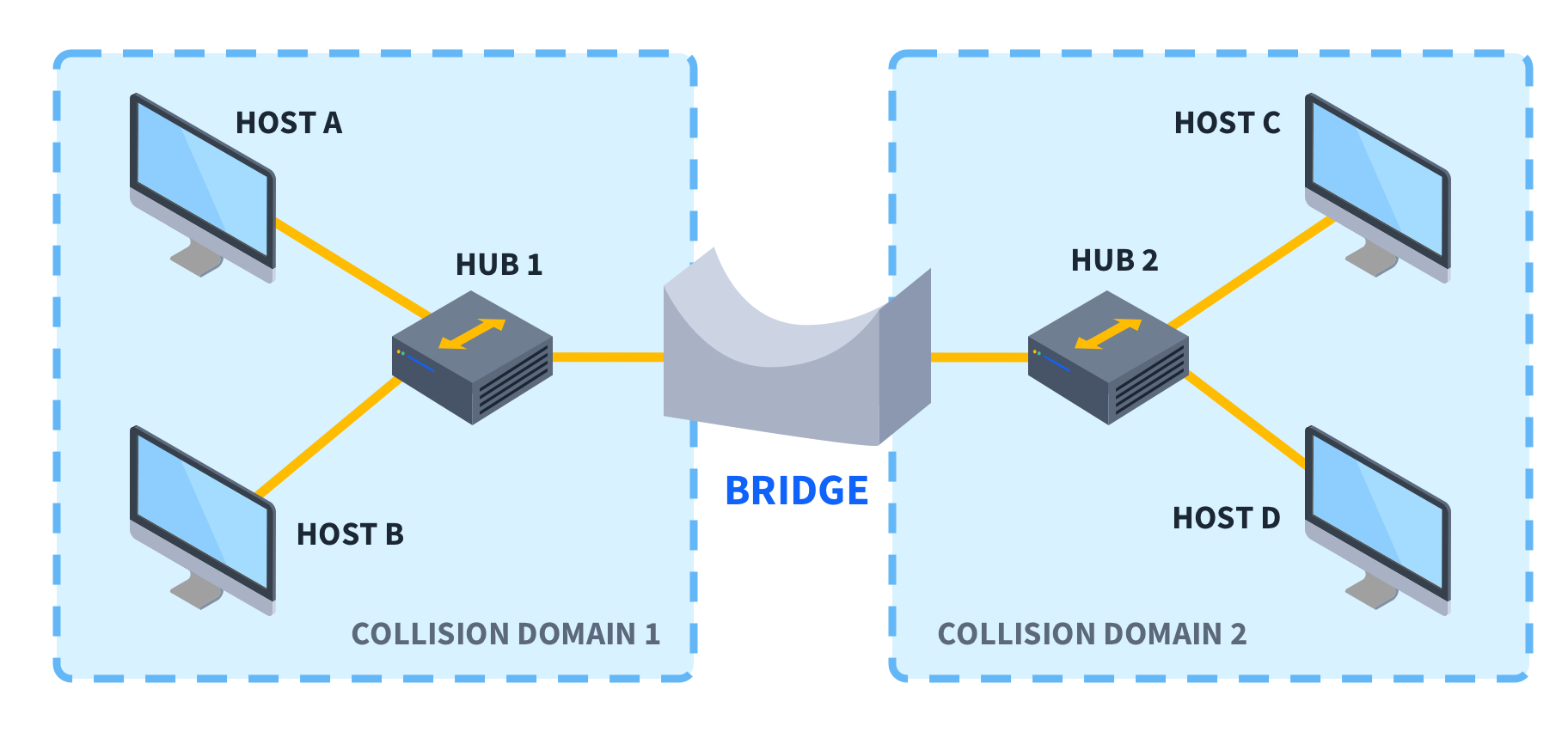
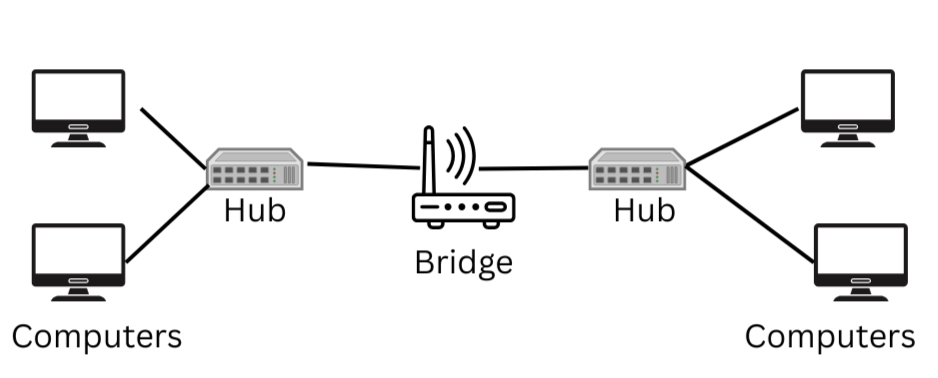

The bridge was the first device to introduce intelligence into Ethernet.
A bridge had:
- two ports (later more),
- the ability to learn MAC addresses,
- and the ability to separate traffic between segments.
What the bridge solved:
Imagine a network with 40 computers connected on hubs.
If divided into two segments of 20 computers each, connected by a bridge:
- local traffic stays local,
- only necessary traffic crosses the bridge,
- half the machines no longer hear every transmission,
- collisions are drastically reduced in each segment.
The bridge created two smaller collision domains instead of one giant one.
This was a huge improvement.
How Bridges Reduced Traffic
Bridges analyzed frames and decided:
- If the destination MAC was on the same side, it did not forward the frame.
- If the MAC was on the other side, it forwarded the frame across the bridge.
- If unknown, it flooded — but only to the other segment, not the entire network.
This simple behavior drastically improved performance.
Bridges were the first step toward true network segmentation, the predecessor of VLANs, switches, and broadcast domain control.
Bridges Evolved Into Multiport Devices, The First Switches
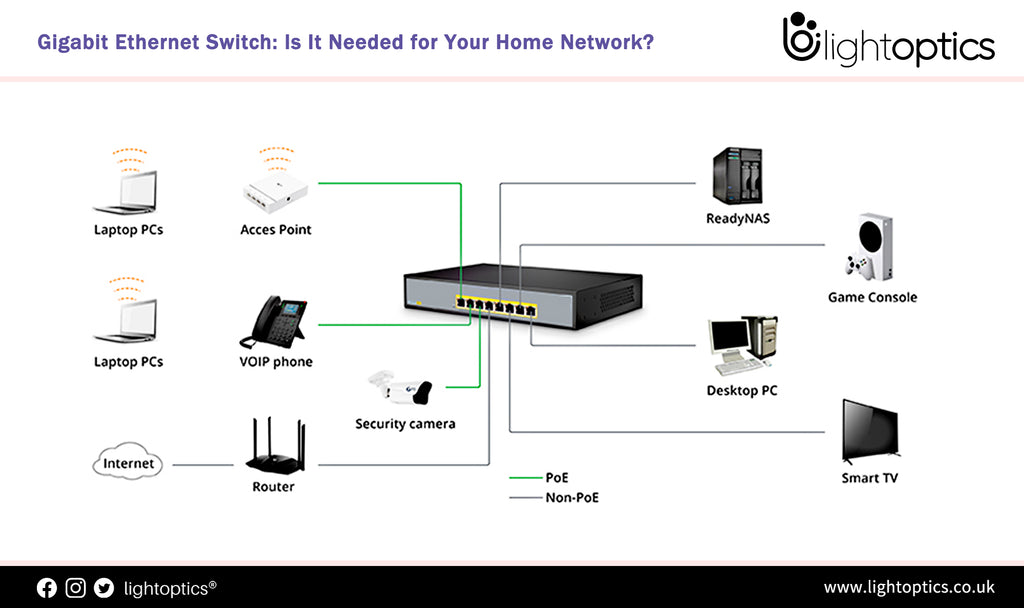
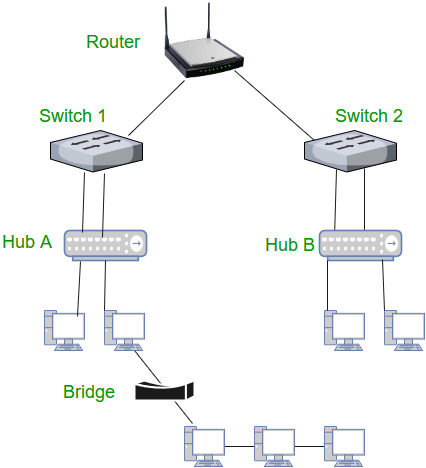
The bridge proved that segmentation was the future.
Manufacturers then:
- increased the number of ports,
- improved the learning algorithms,
- optimized forwarding logic,
- added buffering,
- and implemented per-port collision domains.
The result was the most important device in modern networking:
👉 The Ethernet Switch
Today, switches are essential in every enterprise, datacenter, and ISP environment.
Why This Matters for the Next Lesson
By understanding:
- the limitations of the bus,
- the electrical behavior of hubs,
- the need for segmentation,
- and the role of bridges,
…you are now ready to understand why switches solved all of these problems at once.
Switches:
- eliminate collisions,
- create per-port links,
- enable full-duplex communication,
- and introduce real forwarding intelligence.
Deixe um comentário